15.2 Fractional knapsack problem
Question
Given \(n\) items, where item \(i\) has weight \(wgt[i-1]\) and value \(val[i-1]\), and a knapsack with capacity \(cap\), each item may be selected only once. However, you may take a fraction of an item, with its value proportional to the weight taken. What is the maximum total value that fits within the knapsack's capacity? An example is shown in Figure 15-3.
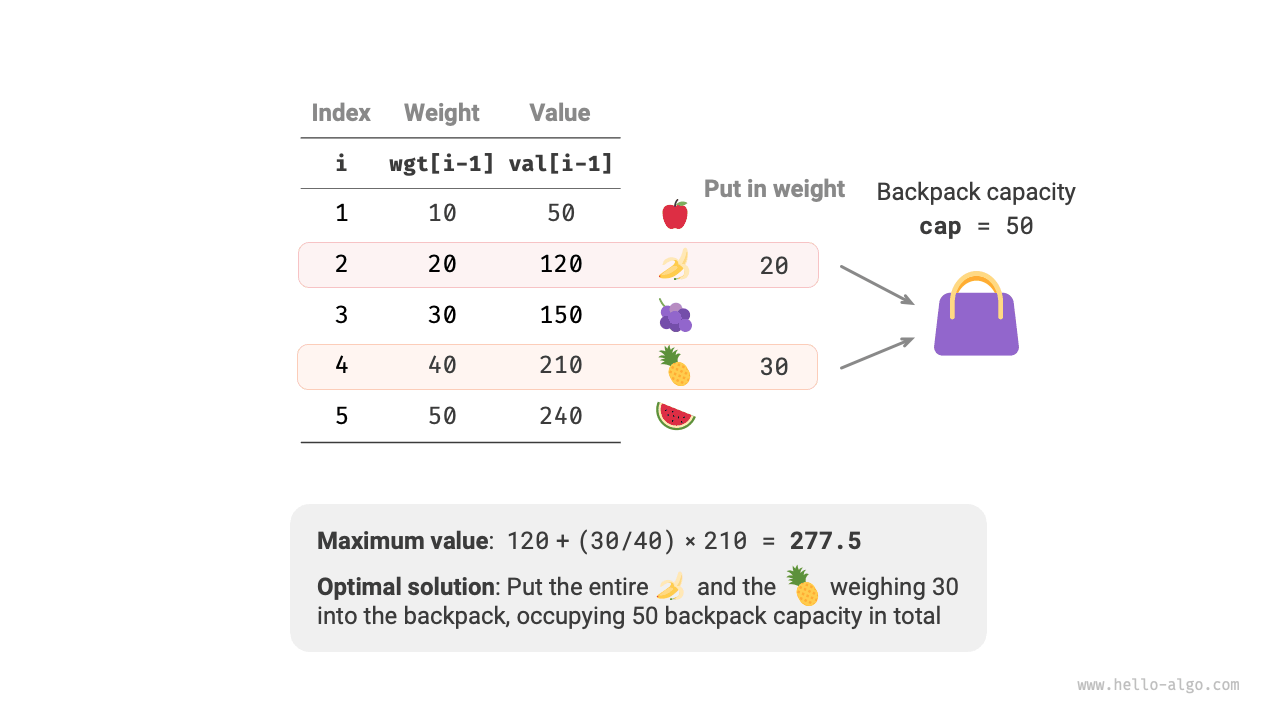
Figure 15-3 Example input for the fractional knapsack problem
The fractional knapsack problem is very similar to the 0-1 knapsack problem. The state consists of the current item \(i\) and capacity \(c\), and the goal is to maximize value within the knapsack's capacity.
The difference is that we may take only part of an item. As shown in Figure 15-4, we can divide items into arbitrary fractions and calculate their values in proportion to their weights.
- For item \(i\), the value per unit weight is \(val[i-1] / wgt[i-1]\), which we call its unit value.
- If we take a portion of item \(i\) weighing \(w\), the value added to the knapsack is \(w \times val[i-1] / wgt[i-1]\).
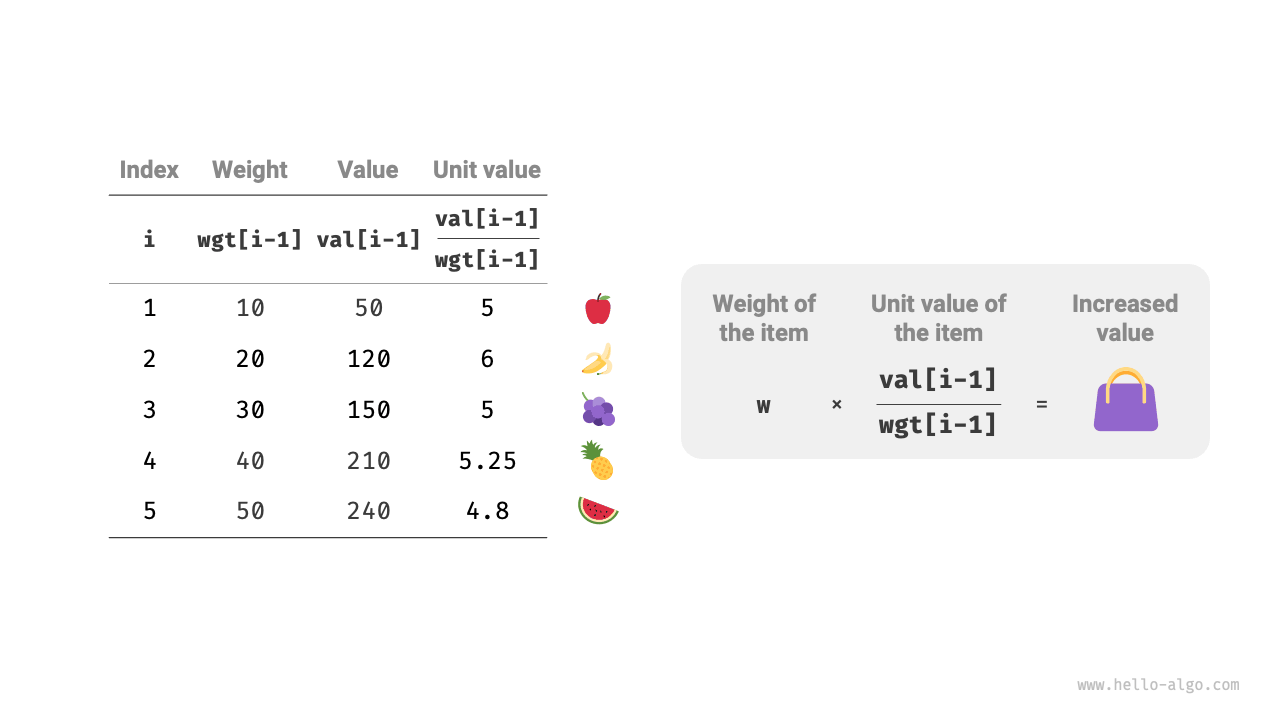
Figure 15-4 Value per unit weight of each item
1. Choosing a greedy strategy
Maximizing the total value in the knapsack essentially means maximizing the value obtained per unit weight. This leads to the greedy strategy shown in Figure 15-5.
- Sort the items by unit value in descending order.
- Iterate through the items, greedily choosing the item with the highest unit value at each step.
- If the remaining capacity is insufficient, take just enough of the current item to fill the knapsack.
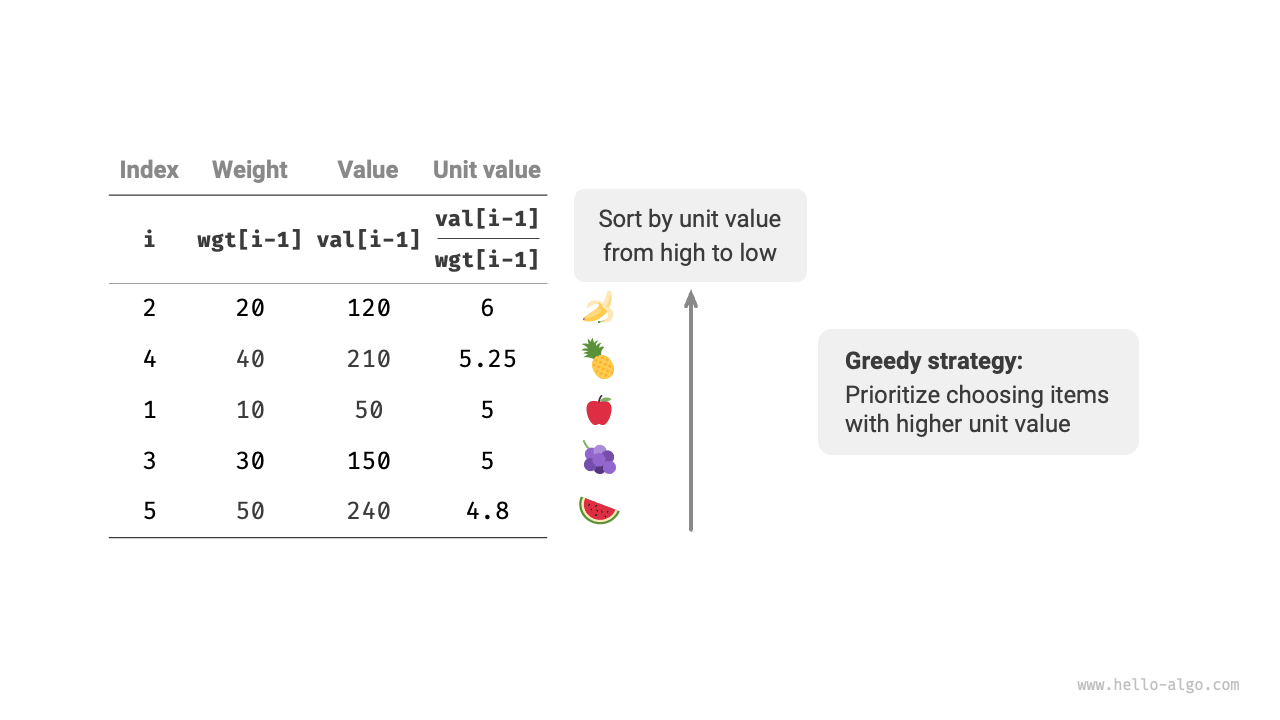
Figure 15-5 Greedy strategy for the fractional knapsack problem
2. Code implementation
We define an Item class to make it easier to sort items by unit value. We repeatedly make greedy choices, stopping and returning the result when the knapsack is full:
class Item:
    """Item"""

    def __init__(self, w: int, v: int):
        self.w = w  # Item weight
        self.v = v  # Item value

def fractional_knapsack(wgt: list[int], val: list[int], cap: int) -> int:
    """Fractional knapsack: greedy algorithm"""
    # Create a list of items, each with two attributes: weight and value
    items = [Item(w, v) for w, v in zip(wgt, val)]
    # Sort by value per unit weight, item.v / item.w, in descending order
    items.sort(key=lambda item: item.v / item.w, reverse=True)
    # Repeatedly make greedy choices
    res = 0
    for item in items:
        if item.w <= cap:
            # If enough capacity remains, put the entire current item in the knapsack
            res += item.v
            cap -= item.w
        else:
            # If the remaining capacity is insufficient, put part of the current item in the knapsack
            res += (item.v / item.w) * cap
            # No capacity remains, so exit the loop
            break
    return res
/* Item */
class Item {
  public:
    int w; // Item weight
    int v; // Item value

    Item(int w, int v) : w(w), v(v) {
    }
};

/* Fractional knapsack: greedy algorithm */
double fractionalKnapsack(vector<int> &wgt, vector<int> &val, int cap) {
    // Create a list of items, each with two attributes: weight and value
    vector<Item> items;
    for (int i = 0; i < wgt.size(); i++) {
        items.push_back(Item(wgt[i], val[i]));
    }
    // Sort by value per unit weight, item.v / item.w, in descending order
    sort(items.begin(), items.end(), [](Item &a, Item &b) { return (double)a.v / a.w > (double)b.v / b.w; });
    // Repeatedly make greedy choices
    double res = 0;
    for (auto &item : items) {
        if (item.w <= cap) {
            // If enough capacity remains, put the entire current item in the knapsack
            res += item.v;
            cap -= item.w;
        } else {
            // If the remaining capacity is insufficient, put part of the current item in the knapsack
            res += (double)item.v / item.w * cap;
            // No capacity remains, so exit the loop
            break;
        }
    }
    return res;
}
/* Item */
class Item {
    int w; // Item weight
    int v; // Item value

    public Item(int w, int v) {
        this.w = w;
        this.v = v;
    }
}

/* Fractional knapsack: greedy algorithm */
double fractionalKnapsack(int[] wgt, int[] val, int cap) {
    // Create a list of items, each with two attributes: weight and value
    Item[] items = new Item[wgt.length];
    for (int i = 0; i < wgt.length; i++) {
        items[i] = new Item(wgt[i], val[i]);
    }
    // Sort by value per unit weight, item.v / item.w, in descending order
    Arrays.sort(items, Comparator.comparingDouble(item -> -((double) item.v / item.w)));
    // Repeatedly make greedy choices
    double res = 0;
    for (Item item : items) {
        if (item.w <= cap) {
            // If enough capacity remains, put the entire current item in the knapsack
            res += item.v;
            cap -= item.w;
        } else {
            // If the remaining capacity is insufficient, put part of the current item in the knapsack
            res += (double) item.v / item.w * cap;
            // No capacity remains, so exit the loop
            break;
        }
    }
    return res;
}
/* Item */
class Item(int w, int v) {
    public int w = w; // Item weight
    public int v = v; // Item value
}

/* Fractional knapsack: greedy algorithm */
double FractionalKnapsack(int[] wgt, int[] val, int cap) {
    // Create a list of items, each with two attributes: weight and value
    Item[] items = new Item[wgt.Length];
    for (int i = 0; i < wgt.Length; i++) {
        items[i] = new Item(wgt[i], val[i]);
    }
    // Sort by value per unit weight, item.v / item.w, in descending order
    Array.Sort(items, (x, y) => (y.v / y.w).CompareTo(x.v / x.w));
    // Repeatedly make greedy choices
    double res = 0;
    foreach (Item item in items) {
        if (item.w <= cap) {
            // If enough capacity remains, put the entire current item in the knapsack
            res += item.v;
            cap -= item.w;
        } else {
            // If the remaining capacity is insufficient, put part of the current item in the knapsack
            res += (double)item.v / item.w * cap;
            // No capacity remains, so exit the loop
            break;
        }
    }
    return res;
}
/* Item */
type Item struct {
    w int // Item weight
    v int // Item value
}

/* Fractional knapsack: greedy algorithm */
func fractionalKnapsack(wgt []int, val []int, cap int) float64 {
    // Create a list of items, each with two attributes: weight and value
    items := make([]Item, len(wgt))
    for i := 0; i < len(wgt); i++ {
        items[i] = Item{wgt[i], val[i]}
    }
    // Sort by value per unit weight, item.v / item.w, in descending order
    sort.Slice(items, func(i, j int) bool {
        return float64(items[i].v)/float64(items[i].w) > float64(items[j].v)/float64(items[j].w)
    })
    // Repeatedly make greedy choices
    res := 0.0
    for _, item := range items {
        if item.w <= cap {
            // If enough capacity remains, put the entire current item in the knapsack
            res += float64(item.v)
            cap -= item.w
        } else {
            // If the remaining capacity is insufficient, put part of the current item in the knapsack
            res += float64(item.v) / float64(item.w) * float64(cap)
            // No capacity remains, so exit the loop
            break
        }
    }
    return res
}
/* Item */
class Item {
    var w: Int // Item weight
    var v: Int // Item value

    init(w: Int, v: Int) {
        self.w = w
        self.v = v
    }
}

/* Fractional knapsack: greedy algorithm */
func fractionalKnapsack(wgt: [Int], val: [Int], cap: Int) -> Double {
    // Create a list of items, each with two attributes: weight and value
    var items = zip(wgt, val).map { Item(w: $0, v: $1) }
    // Sort by value per unit weight, item.v / item.w, in descending order
    items.sort { -(Double($0.v) / Double($0.w)) < -(Double($1.v) / Double($1.w)) }
    // Repeatedly make greedy choices
    var res = 0.0
    var cap = cap
    for item in items {
        if item.w <= cap {
            // If enough capacity remains, put the entire current item in the knapsack
            res += Double(item.v)
            cap -= item.w
        } else {
            // If the remaining capacity is insufficient, put part of the current item in the knapsack
            res += Double(item.v) / Double(item.w) * Double(cap)
            // No capacity remains, so exit the loop
            break
        }
    }
    return res
}
/* Item */
class Item {
    constructor(w, v) {
        this.w = w; // Item weight
        this.v = v; // Item value
    }
}

/* Fractional knapsack: greedy algorithm */
function fractionalKnapsack(wgt, val, cap) {
    // Create a list of items, each with two attributes: weight and value
    const items = wgt.map((w, i) => new Item(w, val[i]));
    // Sort by value per unit weight, item.v / item.w, in descending order
    items.sort((a, b) => b.v / b.w - a.v / a.w);
    // Repeatedly make greedy choices
    let res = 0;
    for (const item of items) {
        if (item.w <= cap) {
            // If enough capacity remains, put the entire current item in the knapsack
            res += item.v;
            cap -= item.w;
        } else {
            // If the remaining capacity is insufficient, put part of the current item in the knapsack
            res += (item.v / item.w) * cap;
            // No capacity remains, so exit the loop
            break;
        }
    }
    return res;
}
/* Item */
class Item {
    w: number; // Item weight
    v: number; // Item value

    constructor(w: number, v: number) {
        this.w = w;
        this.v = v;
    }
}

/* Fractional knapsack: greedy algorithm */
function fractionalKnapsack(wgt: number[], val: number[], cap: number): number {
    // Create a list of items, each with two attributes: weight and value
    const items: Item[] = wgt.map((w, i) => new Item(w, val[i]));
    // Sort by value per unit weight, item.v / item.w, in descending order
    items.sort((a, b) => b.v / b.w - a.v / a.w);
    // Repeatedly make greedy choices
    let res = 0;
    for (const item of items) {
        if (item.w <= cap) {
            // If enough capacity remains, put the entire current item in the knapsack
            res += item.v;
            cap -= item.w;
        } else {
            // If the remaining capacity is insufficient, put part of the current item in the knapsack
            res += (item.v / item.w) * cap;
            // No capacity remains, so exit the loop
            break;
        }
    }
    return res;
}
/* Item */
class Item {
  int w; // Item weight
  int v; // Item value

  Item(this.w, this.v);
}

/* Fractional knapsack: greedy algorithm */
double fractionalKnapsack(List<int> wgt, List<int> val, int cap) {
  // Create a list of items, each with two attributes: weight and value
  List<Item> items = List.generate(wgt.length, (i) => Item(wgt[i], val[i]));
  // Sort by value per unit weight, item.v / item.w, in descending order
  items.sort((a, b) => (b.v / b.w).compareTo(a.v / a.w));
  // Repeatedly make greedy choices
  double res = 0;
  for (Item item in items) {
    if (item.w <= cap) {
      // If enough capacity remains, put the entire current item in the knapsack
      res += item.v;
      cap -= item.w;
    } else {
      // If the remaining capacity is insufficient, put part of the current item in the knapsack
      res += item.v / item.w * cap;
      // No capacity remains, so exit the loop
      break;
    }
  }
  return res;
}
/* Item */
struct Item {
    w: i32, // Item weight
    v: i32, // Item value
}

impl Item {
    fn new(w: i32, v: i32) -> Self {
        Self { w, v }
    }
}

/* Fractional knapsack: greedy algorithm */
fn fractional_knapsack(wgt: &[i32], val: &[i32], mut cap: i32) -> f64 {
    // Create a list of items, each with two attributes: weight and value
    let mut items = wgt
        .iter()
        .zip(val.iter())
        .map(|(&w, &v)| Item::new(w, v))
        .collect::<Vec<Item>>();
    // Sort by value per unit weight, item.v / item.w, in descending order
    items.sort_by(|a, b| {
        (b.v as f64 / b.w as f64)
            .partial_cmp(&(a.v as f64 / a.w as f64))
            .unwrap()
    });
    // Repeatedly make greedy choices
    let mut res = 0.0;
    for item in &items {
        if item.w <= cap {
            // If enough capacity remains, put the entire current item in the knapsack
            res += item.v as f64;
            cap -= item.w;
        } else {
            // If the remaining capacity is insufficient, put part of the current item in the knapsack
            res += item.v as f64 / item.w as f64 * cap as f64;
            // No capacity remains, so exit the loop
            break;
        }
    }
    res
}
/* Item */
typedef struct {
    int w; // Item weight
    int v; // Item value
} Item;

/* Fractional knapsack: greedy algorithm */
float fractionalKnapsack(int wgt[], int val[], int itemCount, int cap) {
    // Create a list of items, each with two attributes: weight and value
    Item *items = malloc(sizeof(Item) * itemCount);
    for (int i = 0; i < itemCount; i++) {
        items[i] = (Item){.w = wgt[i], .v = val[i]};
    }
    // Sort by value per unit weight, item.v / item.w, in descending order
    qsort(items, (size_t)itemCount, sizeof(Item), sortByValueDensity);
    // Repeatedly make greedy choices
    float res = 0.0;
    for (int i = 0; i < itemCount; i++) {
        if (items[i].w <= cap) {
            // If enough capacity remains, put the entire current item in the knapsack
            res += items[i].v;
            cap -= items[i].w;
        } else {
            // If the remaining capacity is insufficient, put part of the current item in the knapsack
            res += (float)cap / items[i].w * items[i].v;
            cap = 0;
            break;
        }
    }
    free(items);
    return res;
}
/* Item */
class Item(
    val w: Int, // Item weight
    val v: Int  // Item value
)

/* Fractional knapsack: greedy algorithm */
fun fractionalKnapsack(wgt: IntArray, _val: IntArray, c: Int): Double {
    // Create a list of items, each with two attributes: weight and value
    var cap = c
    val items = arrayOfNulls<Item>(wgt.size)
    for (i in wgt.indices) {
        items[i] = Item(wgt[i], _val[i])
    }
    // Sort by value per unit weight, item.v / item.w, in descending order
    items.sortBy { item: Item? -> -(item!!.v.toDouble() / item.w) }
    // Repeatedly make greedy choices
    var res = 0.0
    for (item in items) {
        if (item!!.w <= cap) {
            // If enough capacity remains, put the entire current item in the knapsack
            res += item.v
            cap -= item.w
        } else {
            // If the remaining capacity is insufficient, put part of the current item in the knapsack
            res += item.v.toDouble() / item.w * cap
            // No capacity remains, so exit the loop
            break
        }
    }
    return res
}
### Item ###
class Item
  attr_accessor :w # Item weight
  attr_accessor :v # Item value

  def initialize(w, v)
    @w = w
    @v = v
  end
end

### Fractional knapsack: greedy algorithm ###
def fractional_knapsack(wgt, val, cap)
  # Create a list of items, each with two attributes: weight and value
  items = wgt.each_with_index.map { |w, i| Item.new(w, val[i]) }
  # Sort by value per unit weight, item.v / item.w, in descending order
  items.sort! { |a, b| (b.v.to_f / b.w) <=> (a.v.to_f / a.w) }
  # Repeatedly make greedy choices
  res = 0
  for item in items
    if item.w <= cap
      # If enough capacity remains, put the entire current item in the knapsack
      res += item.v
      cap -= item.w
    else
      # If the remaining capacity is insufficient, put part of the current item in the knapsack
      res += (item.v.to_f / item.w) * cap
      # No capacity remains, so exit the loop
      break
    end
  end
  res
end
Visualize execution
Built-in sorting algorithms typically take \(O(n \log n)\) time and \(O(\log n)\) or \(O(n)\) space, depending on the programming language's implementation.
Apart from sorting, the worst case requires traversing the entire item list, so the time complexity is \(O(n)\), where \(n\) is the number of items.
Initializing a list of Item objects requires \(O(n)\) space.
3. Proof of correctness
We use proof by contradiction. Suppose item \(x\) has the highest unit value, and an algorithm produces a maximum value of res, but its solution does not include item \(x\).
Now remove one unit of weight of any item from the knapsack and replace it with one unit of weight of item \(x\). Since \(x\) has the highest unit value, the total value after replacement must exceed res. This contradicts the assumption that res is optimal, showing that an optimal solution must include item \(x\).
We can construct the same contradiction for other items in the solution. Thus, an item with a higher unit value is always a better choice, which establishes the greedy strategy.
As shown in Figure 15-6, if we plot item weight on the horizontal axis and unit value on the vertical axis, the fractional knapsack problem becomes a problem of maximizing the area within a limited horizontal interval. This analogy provides a geometric view of why the greedy strategy works.
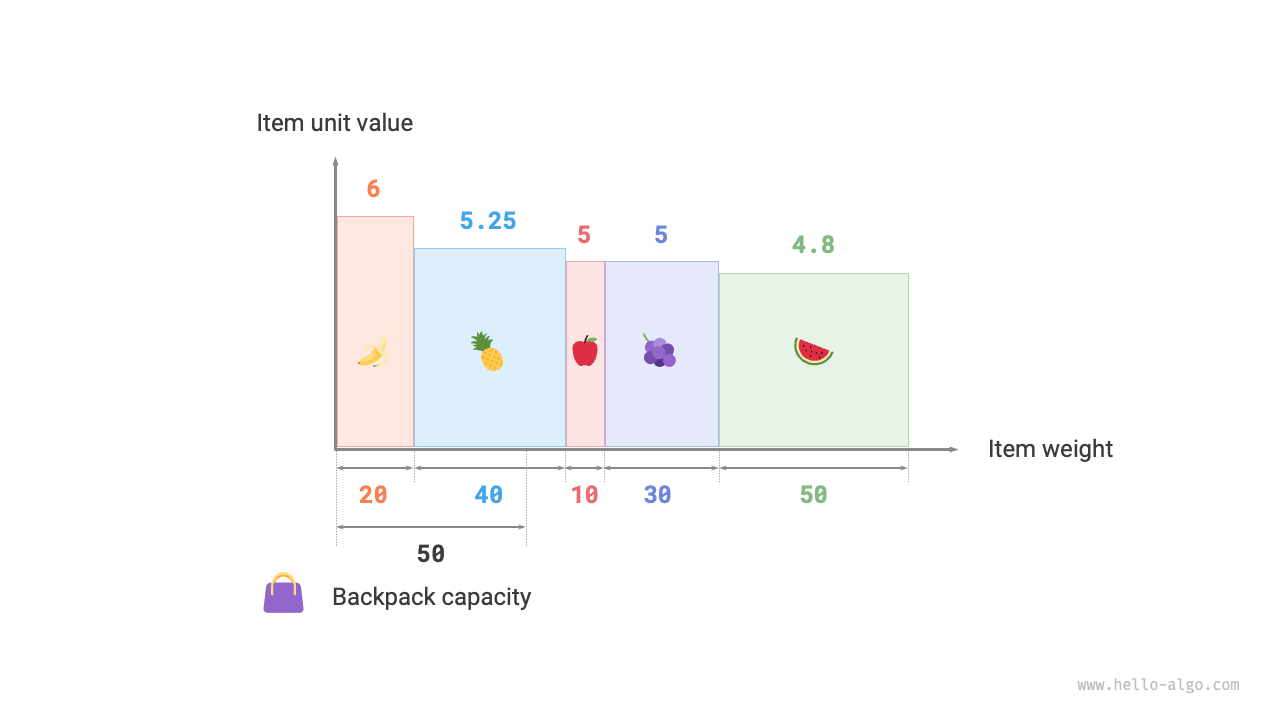
Figure 15-6 Geometric representation of the fractional knapsack problem